

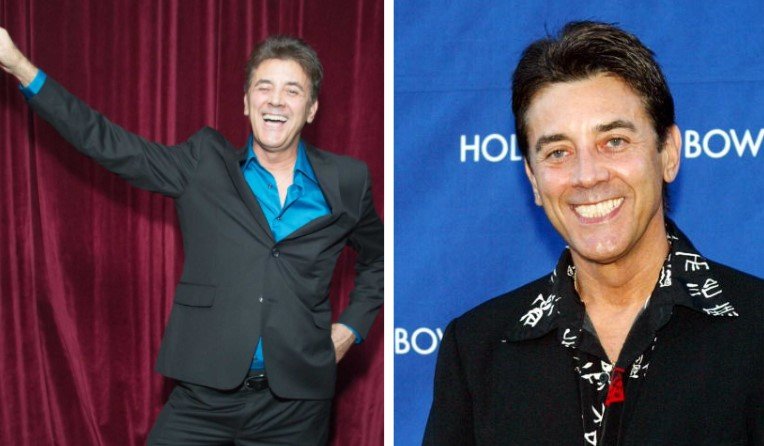
Deney Terrio is an American dancer, choreographer, and television personality whose name became closely associated with the disco era and the rise of dance-focused entertainment on television. He became widely recognized as the host of Dance Fever, the popular competition show that brought dancers and elaborate routines into living rooms across America. With his energetic presentation and knowledge of dance, Terrio helped make the program a defining part of late-1970s and early-1980s pop culture. His work also connected him with the changing dance styles of the period, including the emerging popularity of breakdancing. Unlike performers known mainly for hit records or film roles, Terrio built his public identity around movement, choreography, and television presentation. His career offers a glimpse into a time when dance competitions became major entertainment and television helped shape popular dance trends.
Quick Bio
| Detail | Information |
|---|---|
| Full Name | Deney Terrio |
| Known For | Hosting Dance Fever and promoting dance on television |
| Profession | Dancer, choreographer, television host |
| Nationality | American |
| Birth Date | Not reliably documented in authoritative public sources |
| Birthplace | Publicly reported as the United States; specific details are limited |
| Famous Connection | Dance Fever and the disco-era dance movement |
| Relationship/Connection | Professional role as a dance host and choreographer |
| Children | Not reliably documented in authoritative public sources |
| Education | Detailed information is limited in widely established public accounts |
| Current/Public Status | Publicly known primarily for his dance and television career |
Who Is Deney Terrio?
Deney Terrio, whose professional name became familiar to millions of television viewers, built his career around a combination of dance expertise, performance, and an approachable on-screen presence. He did more than introduce contestants on a television program: he helped explain dance through demonstrations, choreography, and the excitement of competition.
Terrio became particularly prominent during the disco boom of the late 1970s. At the time, dance was central to popular music culture, and television offered performers a way to reach audiences who might never visit a nightclub or dance studio. Terrio understood how to bring that atmosphere to a family audience.
Two projects define his public legacy. He coached John Travolta for Saturday Night Fever, one of the best-known dance films of its era, and he hosted Dance Fever, a syndicated television competition that gave amateur dancers a national platform. Together, these projects established him as an influential figure in the popular presentation of disco dancing.
Deney Terrio’s Early Interest in Dance
Terrio developed his professional identity through dance rather than through a conventional acting or recording career. Public accounts describe him as a dedicated dancer who studied movement and developed the technical skills needed to teach routines to other performers.
Details about his childhood, education, and early training are not consistently documented in authoritative public sources. It is therefore difficult to establish a complete timeline of his formative years without relying on claims repeated by less-reliable biography websites.
What his later work demonstrates is a combination of technical knowledge and showmanship. A choreographer must understand rhythm, timing, body movement, and how to make a routine look convincing onstage or on camera. A television host also needs to communicate clearly and keep an audience engaged. Terrio’s career brought those skills together.
How Deney Terrio Helped John Travolta Prepare for Saturday Night Fever
One of the most important professional connections in Terrio’s career was his work with actor John Travolta on Saturday Night Fever (1977). Travolta played Tony Manero, a young Brooklyn man whose identity and ambitions revolved around dancing. The film’s nightclub sequences needed to feel confident, expressive, and credible, making dance preparation an essential part of the production.
Terrio coached Travolta and helped choreograph the dance movements used in the film. The work required more than teaching a sequence of steps. Travolta needed to convey a character who felt at home on the dance floor, with movements that matched the music and communicated confidence to the audience.
The film became a defining cultural touchstone of the disco era, and its dance scenes helped turn Travolta into a major star. Terrio’s role behind those performances gave him a significant connection to the film’s legacy, even though he was not its leading actor.
Why the Collaboration Mattered
The success of Saturday Night Fever helped bring disco fashion, music, and dancing into mainstream popular culture. Travolta received the most visible recognition because he played the central character, but his dance preparation relied on professional guidance.
Terrio’s contribution illustrates the work that often happens behind a memorable screen performance. Choreographers and dance coaches translate musical ideas into physical movement, then help performers repeat that movement consistently under production conditions. Their work can become part of a film’s identity even when audiences do not immediately recognize their names.
Who Is John Travolta?
John Travolta is an American actor who rose to prominence through television and film before becoming one of the most recognizable performers of the late 1970s. His role as Tony Manero in Saturday Night Fever connected him closely with disco culture, while Grease (1978) reinforced his reputation as a screen performer with strong musical and dance abilities.
Travolta later appeared in major films such as Pulp Fiction, Get Shorty, and Hairspray. His career has included dramatic roles, comedy, action, and musicals, allowing him to remain a familiar figure across several generations of film audiences.
For Terrio, the connection to Travolta is principally professional. He helped the actor prepare for a role that demanded convincing dance skills, and the film’s continuing popularity has kept interest in Terrio’s contribution alive. Their association shows how a specialist working behind the scenes can become part of a major entertainment story without sharing the same public profile as the star.
Dance Fever: The Television Show That Defined Terrio’s Career
After his work with Travolta attracted attention, Terrio became the host of Dance Fever, a syndicated musical variety and dance competition program that premiered in 1979. The series placed amateur dancers in front of television audiences and invited celebrity judges to assess their performances.
Terrio hosted the show during its early and most closely associated years, remaining in the role until 1985. The program continued after his departure, with Adrian Zmed taking over as host. The series itself ran until 1987.
The format suited Terrio’s background. He could introduce contestants, engage with judges, demonstrate dance movements, and help maintain the pace of a competition. His own dancing also reinforced the show’s central appeal: the host was not simply an announcer but someone with practical experience in the art form being celebrated.
What Made Dance Fever Stand Out?
Dance competitions were not new, but Dance Fever combined popular music, amateur performers, celebrity appearances, and a contest structure designed for weekly television. Couples competed with routines influenced by the dance styles and music of the period, while judges offered opinions on their performances.
The show also reflected the era’s entertainment industry, when syndicated programs could reach viewers across the country without depending on a single national broadcast network. This distribution model helped dance-oriented entertainment reach a broad audience.
Terrio’s hosting style gave the series a recognizable center. He could speak the language of dance while still presenting the competition in a way that casual viewers could follow. The result was a show that documented the popularity of disco and adapted as musical tastes changed during the 1980s.
Deney Terrio’s Choreography Beyond Disco
Although Dance Fever became his signature television credit, Terrio also worked as a choreographer and performer in film. His experience teaching dance translated naturally to productions that required performers to move convincingly in front of a camera.
He worked on The Idolmaker (1980), a musical drama inspired by the world of pop-music promotion, and contributed choreography and staging to A Night in Heaven (1983). These projects allowed him to apply his knowledge of performance outside the weekly dance-competition format.
Choreography involves more than designing visually appealing movements. The choreographer must consider the performers’ abilities, the music, camera angles, scene requirements, and the overall tone of the production. Terrio’s work across television and film demonstrated his ability to operate in different entertainment settings.
Deney Terrio’s Acting and Television Appearances
Terrio also appeared on screen as a performer. His film credits included The Idolmaker, Star Trek II: The Wrath of Khan (1982), A Night in Heaven, and Knights of the City (1986). He made appearances on television programs, including The Love Boat.
These roles expanded his public presence beyond choreography and hosting. However, acting did not replace dance as the central theme of his professional identity. His reputation remained closely tied to the disco movement, dance instruction, and the television program that brought him into millions of homes.
His career is an example of how entertainment professionals can move between different roles without becoming identified equally with each one. Terrio’s experience as a dancer gave him credibility as a host, while his television visibility helped introduce his work to audiences who might not otherwise have encountered a choreographer.
How Deney Terrio Adapted as Disco Lost Its Dominance
Disco’s mainstream popularity declined around the turn of the 1980s, but dance did not disappear from popular entertainment. New musical styles and street-dance movements continued to develop, and television, film, and live performances provided spaces for dancers to reach audiences.
Terrio’s career continued beyond the height of Dance Fever. During the 1990s, he toured nightclubs and judged dance competitions, maintaining his connection with live audiences and the dance community. These activities differed from hosting a nationally syndicated television program, but they relied on the same underlying skills: understanding movement, presenting performers, and connecting with people who enjoyed dance.
His career also shows why it can be misleading to describe a performer as belonging to only one musical era. Although the disco boom shaped his public image, Terrio continued to work in entertainment after the cultural moment that first brought him widespread recognition.
Deney Terrio’s Return to Disco-Era Programming
Terrio later participated in television specials that revisited the music and dance culture of the 1970s. In 2004, he co-hosted the PBS special Get Down Tonight: The Disco Explosion, which celebrated disco performers and the era’s enduring appeal.
The special also connected Terrio with Karen Lynn Gorney, Travolta’s co-star in Saturday Night Fever. Their participation recalled the dance culture that had helped make the film memorable. For Terrio, this kind of program offered a chance to revisit a period closely associated with his work without relying solely on old television footage.
He also appeared in retrospective programming about disco and popular culture. Such appearances helped keep his name familiar to viewers interested in the music, fashion, and dance styles of the late 1970s.
Radio Hosting and Live Dance Events
Terrio’s work eventually extended into radio and live entertainment. He hosted a disco-focused radio program called Saturday Night Dance Party on Sirius Satellite Radio, bringing his knowledge of the era to an audio format.
Radio required a different approach from dance television. Without visual demonstrations, a presenter needs to create atmosphere through speech, music selection, and knowledge of the subject. Terrio’s familiarity with disco gave him a natural connection to listeners interested in the genre’s performers and history.
He has also been associated with live disco-themed events, including the Ultimate Disco Cruise. These appearances reflect the continuing interest in music from the 1970s and 1980s, particularly among audiences who experienced the era firsthand and those discovering its songs and dances later.
His continued association with disco events demonstrates the lasting value of a recognizable entertainment identity. Terrio’s connection to dance was not limited to a single television series; it became the foundation for work across several formats.
Deney Terrio’s Professional Legacy
Terrio’s legacy rests on two closely connected achievements: helping John Travolta prepare for a career-defining dance role and hosting Dance Fever during its early years. The first placed him behind one of the most memorable dance performances in popular cinema. The second made him a familiar face in homes across the United States.
His influence should be understood in proportion to the evidence. He was not the only choreographer shaping dance on screen, and the growth of disco and televised dance competitions involved many performers, producers, musicians, and choreographers. Nevertheless, his work on Saturday Night Fever and Dance Fever gives him a clear place in the story of dance-oriented entertainment.
The show’s competition format also anticipated elements that audiences would later recognize in other televised dance programs. It combined skilled performance with accessible competition, giving viewers a reason to follow individual dancers as well as enjoy the music.
Deney Terrio’s Personal Life and Family
Compared with his professional career, Terrio’s private life receives limited attention in established public accounts. Information about his family, children, education, and personal relationships is not sufficiently documented to support a detailed account without risking inaccuracies.
For that reason, it is better to distinguish his documented entertainment work from unverified personal claims. Public curiosity about a television personality does not make every detail circulating online reliable, especially when sources repeat information without showing where it originated.
Terrio’s public story can be understood through his work as a dancer, choreographer, television host, and performer. Those roles provide a substantial record of his contribution to entertainment without requiring assumptions about aspects of his life that he has not publicly documented in detail.
Deney Terrio’s Net Worth and Financial Life
A verified current net worth for Deney Terrio is not established by authoritative public financial records. Celebrity wealth websites sometimes publish estimates, but these figures are not equivalent to audited statements or confirmed disclosures.
Terrio’s career included television hosting, choreography, acting, radio, and live appearances. Those professional activities may have provided income at different points in his career, but the available public information does not establish his earnings, assets, liabilities, or current financial position.
It would therefore be misleading to present a specific dollar figure as fact. His professional legacy is more clearly documented than his personal finances.
Where Is Deney Terrio Today?
Terrio’s later public profile has centered on disco retrospectives, interviews, and events celebrating the music and dance culture with which he became associated. His work on Saturday Night Fever and Dance Fever continues to attract attention whenever audiences revisit the disco era.
However, detailed and consistently verified information about his current day-to-day life is limited. Without reliable recent documentation, claims about his exact residence, family circumstances, or current employment should not be treated as established facts.
His place in entertainment history remains clear even where recent personal details are less accessible. Terrio helped teach a major film star to dance, hosted a successful television competition, and continued to participate in projects celebrating dance and disco long after the genre’s original commercial peak.
Conclusion
Deney Terrio built a distinctive career by combining dance expertise with the ability to entertain a television audience. His coaching and choreography for John Travolta in Saturday Night Fever connected him to one of disco’s defining films, while Dance Fever established him as a recognizable host during the era’s television boom.
His later work in film, radio, retrospective specials, and live events extended that connection across several decades. Although details about his private life and finances remain limited, his professional contributions are well established. Terrio’s story highlights the important role choreographers and hosts play in turning dance into a lasting part of popular culture.
FAQs
Who is Deney Terrio?
Deney Terrio is an American dancer, choreographer, television host, and performer. He is best known for hosting Dance Fever and coaching John Travolta for Saturday Night Fever.
What is Deney Terrio famous for?
Terrio became famous for his connection to disco dancing on television. His best-known work includes choreographing and coaching Travolta’s dance routines for Saturday Night Fever and hosting Dance Fever from 1979 to 1985.
Did Deney Terrio teach John Travolta to dance?
Yes. Terrio coached Travolta and helped choreograph the actor’s dance movements for Saturday Night Fever. Their professional collaboration contributed to the film’s memorable nightclub sequences.
How long did Deney Terrio host Dance Fever?
Terrio hosted Dance Fever from 1979 until 1985. Adrian Zmed subsequently took over, and the syndicated series continued until 1987.
What movies did Deney Terrio appear in?
His film credits include The Idolmaker, Star Trek II: The Wrath of Khan, A Night in Heaven, and Knights of the City. He also worked in choreography and staging, extending his involvement beyond acting.
What is Deney Terrio’s net worth?
His current net worth has not been reliably established through authoritative public financial information. Online estimates should be treated as unverified rather than confirmed figures.
What is Deney Terrio doing today?
Terrio has remained associated with disco retrospectives, interviews, and live events celebrating dance-era music. Reliable public information about his current private life and day-to-day activities remains limited.
For More Visit Momentum Stats
