

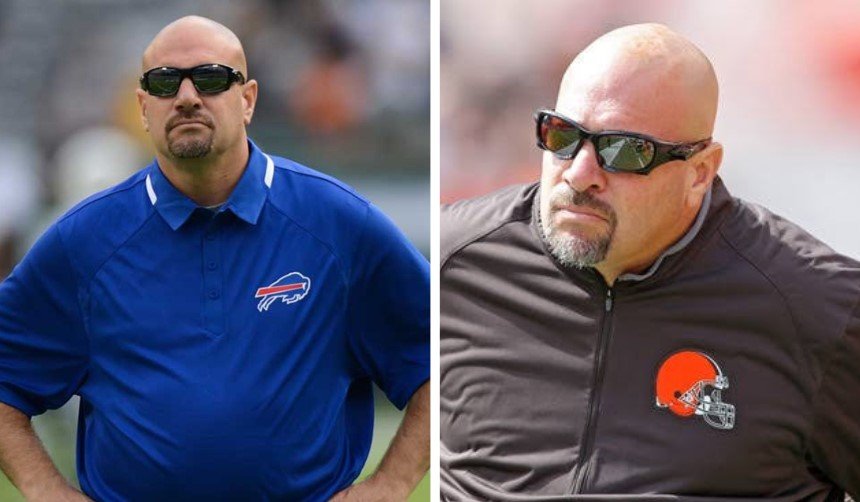
Mike Pettine built his reputation in American football through defensive strategy, demanding preparation, and years of work at both the college and professional levels. As an NFL coach, he moved from assistant positions into major responsibilities, including head coach of the Cleveland Browns and defensive coordinator for the Green Bay Packers. His career reflects the challenges of building competitive defenses, managing talented players, and making decisions under the intense pressure of professional football. Pettine became especially prominent when Cleveland appointed him head coach in 2014, giving him the opportunity to lead a franchise searching for stability and success. Although his time in that role lasted only two seasons, his wider coaching career extends well beyond Cleveland. His work with several NFL teams offers a useful look at how defensive-minded coaches develop their philosophies and adapt to different organizations. Here is a closer look at Mike Pettine’s background, coaching career, major professional milestones, and place in the NFL.
Quick Bio
| Detail | Information |
|---|---|
| Full Name | Mike Pettine |
| Known For | NFL head coach and defensive coordinator |
| Profession | American football coach |
| Nationality | American |
| Birth Date | September 25, 1966 |
| Birthplace | Doylestown, Pennsylvania, United States |
| College | University of Virginia |
| Coaching Specialty | Defensive football |
| Notable Head Coaching Role | Cleveland Browns |
| Other Major NFL Role | Defensive coordinator, Green Bay Packers |
| Father | Mike Pettine Sr., a longtime high school football coach |
| Current/Public Status | His most prominent documented roles include NFL head coaching and defensive coordinating; current employment should be checked against the latest team announcements. |
Who Is Mike Pettine?
Mike Pettine is an American football coach whose career spans high school football, college coaching, and multiple positions in the National Football League. He developed a particular reputation for defensive coaching, helping teams prepare for opposing offenses and organize their pass rushes and coverage schemes.
Pettine reached the highest-profile position of his career when the Cleveland Browns hired him as head coach in January 2014. Before that appointment, he had served as defensive coordinator for the New York Jets and Buffalo Bills. He later held the same coordinator role with the Green Bay Packers, adding experience with several different NFL organizations.
His career stands out because he has worked in different coaching environments rather than following one straight path. He began by assisting his father at a Pennsylvania high school, progressed through college football, and gradually earned responsibilities with professional teams. His experience illustrates how years of specialized coaching can lead to leadership opportunities in the NFL.
Growing Up in a Football Family
Football shaped Pettine’s life long before he joined the professional coaching ranks. His father, Mike Pettine Sr., became a respected high school coach in Pennsylvania and spent decades leading Central Bucks West High School. Growing up around that program gave Pettine an early understanding of the preparation, discipline, and attention to detail required to build a competitive team.
Pettine also played football at Central Bucks West, earning All-State recognition as a quarterback and defensive back. His playing experience helped him understand the game from a player’s perspective before he began developing his own coaching approach.
His father’s career provided a direct example of how a coach could influence a team and its wider community. However, Pettine still had to establish his own professional reputation. His eventual move into the NFL came through a series of coaching positions, each of which added experience and responsibility.
College Football and His Education at Virginia
Pettine attended the University of Virginia, where he played free safety for the college football team. He earned playing letters during the 1986 and 1987 seasons and graduated with a degree in economics.
His time at Virginia gave him experience in a college football environment, where players face more advanced competition and coaches must balance individual development with team strategy. Playing safety also exposed him to the defensive side of the game, a specialty that would later define much of his professional career.
After completing his degree, Pettine returned to coaching rather than pursuing a long playing career. His transition from player to coach allowed him to apply his football knowledge in a different way. Instead of concentrating on individual performance, he began working on team preparation, player development, and the tactical decisions that influence results.
Learning the Profession Under His Father
Pettine began his coaching career as an assistant at Central Bucks West, working on his father’s staff from 1988 through 1992. This early period gave him an opportunity to learn the practical responsibilities of coaching while remaining close to a program he knew well.
Working at high school level also required a broad approach. Coaches must help players improve their skills, understand assignments, and work together, often while managing responsibilities beyond a single position group. These experiences gave Pettine a foundation that he later carried into college and professional football.
He subsequently joined the University of Pittsburgh as a defensive graduate assistant in 1993 and 1994. That move marked an important step away from his original high school environment and toward a more specialized coaching career.
Building His Own Record as a High School Head Coach
Before entering the NFL, Pettine led two Pennsylvania high school programs. He became head coach at William Tennent High School in 1995 and remained there through 1996. The team improved during his tenure and recorded a school-best nine victories in his second season.
Pettine then took charge of North Penn High School, where he coached from 1997 to 2001. The program won 45 games during his five seasons, including an 11–2 record in 1999.
These results helped establish his credentials as more than an assistant coach with a famous football background. He had experience directing a program, preparing teams for competition, and taking responsibility for results.
High school coaching also provided lessons that remained relevant as he advanced. A head coach must coordinate different parts of a team, communicate expectations, and make decisions when circumstances change. Pettine would later face those same challenges on a much larger stage in the NFL.
Mike Pettine’s Move to the NFL
Pettine entered the NFL coaching ranks with the Baltimore Ravens in 2002. He initially worked in coaching assistance and video-related roles before moving into more specialized defensive assignments.
His responsibilities expanded over the following years. He worked with the defensive line and later became the Ravens’ outside linebackers coach, a position he held from 2005 through 2008.
The role gave him the chance to work closely with players responsible for pressuring quarterbacks, defending against the run, and reacting to offensive formations. Those responsibilities suited the defensive focus he had developed during his playing and coaching years.
The Ravens period also exposed Pettine to the demands of a professional organization competing at the highest level. NFL coaches must analyze film, develop game plans, make adjustments, and help players execute assignments against opponents with exceptional talent. His progression through several assistant roles provided a foundation for his later work as a defensive coordinator.
How the New York Jets Raised His Profile
In 2009, Pettine became defensive coordinator for the New York Jets under head coach Rex Ryan. This appointment marked a major career milestone because it placed him in charge of a complete NFL defensive unit rather than an individual position group.
The Jets produced strong defensive performances during his four seasons in the role. In 2009, they ranked first in the NFL in total defense and passing defense. They also reached the AFC Championship Game in both the 2009 and 2010 seasons, giving Pettine experience preparing a defense for high-stakes playoff football.
The team’s aggressive defensive approach attracted attention. Coordinators must decide how to pressure the quarterback, disguise coverage, and respond to an opponent’s strengths. Pettine’s work with Ryan’s staff helped establish him as a coach capable of contributing to an effective defensive system.
His time in New York also connected him with coaches and players who would become part of his wider professional network. The relationships formed during those years became relevant as he moved between teams and took on new responsibilities.
A New Challenge With the Buffalo Bills
Pettine left the Jets after the 2012 season and joined the Buffalo Bills as defensive coordinator in 2013. The move gave him another opportunity to demonstrate his approach with a different roster and coaching staff.
Buffalo finished among the NFL’s top 10 defenses in total yards allowed that season. The result strengthened Pettine’s reputation as a coordinator who could help organize a competitive unit across different team environments.
The Bills job also served as a bridge between his assistant-coaching career and his first NFL head coaching opportunity. Successful coordinators often attract interest from teams seeking leaders who can establish a clear identity and improve performance. Pettine’s work in New York and Buffalo helped put him in that position.
Why the Cleveland Browns Hired Mike Pettine
The Cleveland Browns named Pettine their head coach on January 23, 2014. The appointment represented a significant change in responsibility: instead of concentrating primarily on defense, he now had to oversee the entire team, coordinate with other coaches, and manage the wider demands of an NFL head coaching job.
Cleveland had struggled to achieve sustained success, so the new coach faced pressure to build a competitive team. Pettine brought a defensive background and experience working with established NFL coaching staffs. The organization hoped that his approach would help create greater consistency.
The Browns showed encouraging signs during his first season. They won seven games in 2014, their highest total since 2007, and remained in contention for a winning record well into the season. The team also produced memorable comeback victories.
However, the season ended with a 7–9 record. Cleveland struggled to maintain its early momentum, and the challenges became more severe in 2015.
What Happened During Pettine’s Time in Cleveland?
Pettine’s second season as head coach proved difficult. The Browns finished 3–13 in 2015, leaving him with a 10–22 regular-season record across his two years in charge. The organization dismissed him after the season as it pursued another coaching change.
His Cleveland tenure shows the difference between excelling in a specialist coaching role and managing an entire NFL team. A defensive coordinator can concentrate on one unit, while a head coach must also oversee offensive and special-teams performance, staff coordination, roster decisions, and the team’s overall direction.
The Browns’ results did not meet the organization’s expectations. Still, Pettine’s dismissal did not erase the experience he gained from leading a franchise. The role added a different perspective to his coaching background and helped shape the range of responsibilities he could bring to future teams.
Green Bay Packers and a Return to Defensive Coordination
After spending 2017 as a defensive consultant with the Seattle Seahawks, Pettine joined the Green Bay Packers as defensive coordinator in 2018. He remained in the role through the 2020 season.
The Packers appointment returned him to a position that matched his strongest professional experience. He could concentrate on defensive planning, work with position coaches, and help prepare the unit for weekly opponents.
During his time in Green Bay, the team reached the NFC Championship Game in the 2019 and 2020 seasons. The Packers’ overall success during those years gave Pettine another opportunity to work within a playoff-contending organization.
His tenure ended after the 2020 season, when Green Bay made a change in its defensive coaching structure. Pettine then moved into a senior defensive assistant role with the Chicago Bears in 2021, continuing his work on the defensive side of the game.
Mike Pettine’s Work With the Minnesota Vikings
Pettine joined the Minnesota Vikings in 2022 as assistant head coach under Kevin O’Connell. The position allowed him to contribute beyond a single defensive assignment while drawing on his experience as a coordinator and former head coach.
He later took on responsibilities with the outside linebackers. In 2024, Vikings outside linebackers Jonathan Greenard and Andrew Van Ginkel produced strong pass-rushing seasons, with each recording at least 11.5 sacks. The team finished the regular season 14–3 and reached the playoffs.
Those results formed part of Pettine’s later coaching work and demonstrated how his experience continued to fit into an NFL staff. A veteran assistant can contribute through technical knowledge, preparation, communication, and an understanding of how different parts of a coaching operation work together.
Mike Pettine Joins the Dallas Cowboys in 2026
Pettine returned to the NFL spotlight in October 2026 when the Dallas Cowboys hired him as a senior defensive assistant. The move brought him into a staff seeking to improve a defense that had struggled early in the season.
Dallas head coach Brian Schottenheimer had previously worked with Pettine during their time with the New York Jets. Pettine also had a professional connection with Cowboys defensive coordinator Christian Parker through their time in Green Bay. Those working relationships gave the organization familiarity with his coaching experience and defensive background.
The senior assistant role differs from being a coordinator or head coach. Rather than taking sole responsibility for the defense, Pettine can provide experience and advice while supporting the staff’s existing structure. His return also shows that a difficult head coaching stint does not necessarily end a coach’s value in the league.
Mike Pettine’s Coaching Philosophy
Pettine’s career has largely revolved around defense, particularly the planning and execution needed to disrupt opposing offenses. His work as a coordinator required him to evaluate personnel, study opponents, prepare tactical responses, and help players understand their responsibilities.
His experience with several teams also suggests the importance of adaptability. A defensive system must fit the available players and respond to the style of the opponent. A scheme that works with one roster may require adjustments when a coach changes organizations.
Pettine’s career has included both successful stretches and difficult outcomes. His defenses helped teams reach major playoff games, while his head coaching tenure in Cleveland ended after two losing seasons. Taken together, those experiences provide a more complete picture of his work than any single record or job title can offer.
Mike Pettine’s Family and Personal Life
Pettine comes from a coaching family, and his father’s influence forms a documented part of his professional background. Mike Pettine Sr. spent decades coaching high school football and became known for building a successful program at Central Bucks West.
Public biographical information also identifies Pettine’s wife as Megan and describes a blended family with six children. However, Pettine has generally maintained a professional public profile centered on football rather than making his family life a major part of his public identity.
Beyond these reported details, it is important not to assume private information that he has not made public. His career achievements and coaching appointments provide the clearest documented basis for understanding his public story.
Mike Pettine’s Net Worth and Earnings
A verified current net worth for Mike Pettine is not reliably established in authoritative public sources. NFL coaches can earn substantial salaries, but their individual contracts and total financial assets are not always disclosed publicly.
Pettine has held a variety of professional positions, including NFL head coach, defensive coordinator, assistant head coach, and senior defensive assistant. Those roles differ in responsibility and compensation, and his career history alone does not establish a reliable personal net worth figure.
For that reason, assigning him a specific dollar amount would be speculative. Any estimate should be treated cautiously unless supported by dependable financial documentation.
Mike Pettine’s Legacy in American Football
Pettine’s career reflects the different routes available to coaches who specialize in one side of football. He started as a high school assistant, became a head coach at the high school level, and progressed through several NFL roles before leading Cleveland.
His work with the Jets, Bills, Packers, Vikings, and Cowboys demonstrates the value teams have placed on his defensive experience. His career also highlights the different expectations attached to each position: a coordinator must build an effective unit, while a head coach must manage the full team and deliver results across every phase of the game.
Pettine’s record is not defined by one uninterrupted run of success. Instead, it includes playoff appearances, productive defensive seasons, a challenging head coaching period, and continued opportunities to contribute as a veteran assistant. That range makes his career a useful example of how NFL coaches can evolve through changing roles and organizations.
Conclusion
Mike Pettine has spent decades building a career in American football, progressing from high school coaching in Pennsylvania to prominent defensive roles across the NFL. His work as defensive coordinator for the New York Jets, Buffalo Bills, and Green Bay Packers helped establish his reputation, while his time as Cleveland Browns head coach gave him experience with the demands of leading an entire franchise.
His later work with the Minnesota Vikings and his 2026 appointment as a senior defensive assistant with the Dallas Cowboys show that his coaching career continued beyond Cleveland. Pettine’s story is ultimately one of specialization, adaptation, and persistence in a profession where results and responsibilities can change quickly.
FAQs
Who is Mike Pettine?
Mike Pettine is an American football coach known for his work as an NFL defensive coordinator and head coach. He led the Cleveland Browns in 2014 and 2015 and has coached for several other NFL teams.
How old is Mike Pettine?
Mike Pettine was born on September 25, 1966. As of October 2026, he is 60 years old.
Which NFL team did Mike Pettine coach most recently?
In October 2026, the Dallas Cowboys hired Pettine as a senior defensive assistant. Before that appointment, he worked with the Minnesota Vikings as assistant head coach and in an outside linebackers coaching role.
Was Mike Pettine the head coach of the Cleveland Browns?
Yes. Cleveland hired Pettine in January 2014. He coached the team for two seasons, finishing with a 10–22 regular-season record before the Browns dismissed him after the 2015 season.
Which teams has Mike Pettine served as defensive coordinator for?
Pettine served as defensive coordinator for the New York Jets from 2009 to 2012, the Buffalo Bills in 2013, and the Green Bay Packers from 2018 to 2020.
Did Mike Pettine play professional football?
Pettine played college football as a free safety at the University of Virginia. His documented playing career focused on college football, and he subsequently built his career as a coach rather than as an NFL player.
What is Mike Pettine’s net worth?
A verified figure for Mike Pettine’s current net worth is not publicly established in authoritative sources. His coaching career has included several high-level NFL positions, but those roles do not provide enough information to calculate his personal wealth reliably.
For More Visit Momentum Stats
